
AI Marketing 2026: Guide for MBA Students
Introduction to AI Powered Marketing
Marketing has become much more data-driven in recent years. By 2027, Artificial Intelligence (AI) will not be considered just an emerging technology but will be the main infrastructure of many marketing departments. As an MBA student looking to understand AI marketing, you'll need to thoroughly understand how machine learning and big data fit together with consumer psychology.
What is AI Marketing?
AI Marketing is the process of using technology to improve the way customers experience your brand or product/service by making automated decisions based on data that has been collected, analyzed and/or obtained through observation of the audience/economic trends that may affect a company's marketing strategy. AI Marketing is often used where quick decisions need to be made, such as in real-time ad auctions or when an Immediate Chatbot response is required.
History of Marketing and AI
Marketing has gone through different eras, including:
-
Mass Marketing (one message for all users: Radio/Television)
-
Segmentation (grouping users by demographics)
-
Digital Personalization (using cookies and tracking users)
-
AI-Driven Hyper Personalization (The current era - Going from "How did they do something?" to "How will they do something?")
How You Can Benefit from Using AI for Marketing
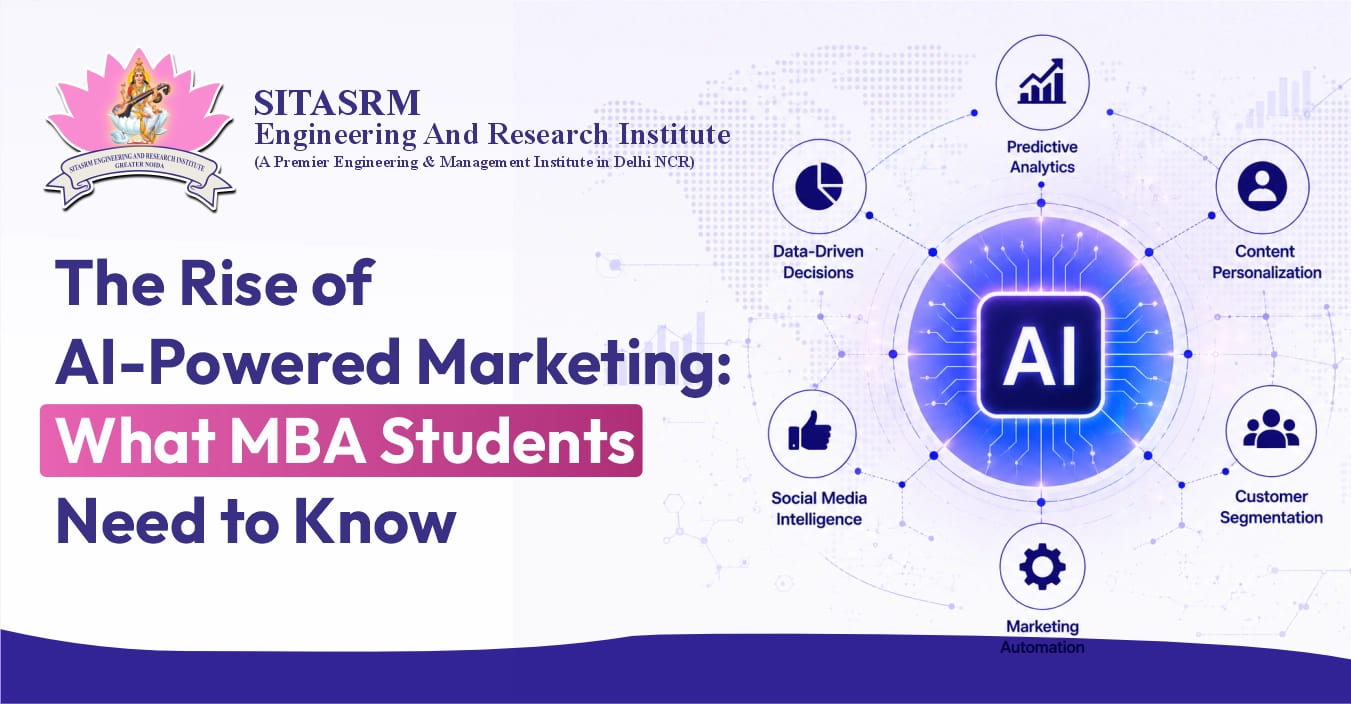
Marketers take help from AI to analyze large amounts of information on social media, email, and the internet in a timely fashion so that they can look for trends where users may not see them. This gives way to micro-segmentation, where marketing is targeted to a consumer on an individual basis rather than broadly to groups of consumers. Some common benefits are listed below:
Eliminating Human Errors
The existence of AI is to streamline processes and help remove all possibilities of human errors associated with the management of data and information systems. By monitoring the security of data, AI protects consumers' sensitive data and helps ensure that the marketing campaigns being executed are compliant and secure.
Connecting Business to Business
AI provides a connection between all of the information systems used in the business, providing an integrated approach to the marketing strategy through an end-to-end approach to business processes. The utilization of AI, in this context, enables creative or human-driven marketing strategies. For example, AI would enable the synchronization of promotional advertising with supply chain data, thereby eliminating the waste of money on promoting products that are not available for purchase.
Real-time Analysis of Large Volumes of Market Data
The application of algorithms enables marketers to assess their websites' visitor traffic in real-time and make immediate changes to website advertising. By using behavioural data as the basis for analyzing visitor activity, AI allows marketers to focus on desired outcomes for their clients when recommending products that clients actually need, versus relying upon previously developed consumer personas to make the recommendation.
Reducing Workload
Using Predictive analytics allows you to extract significant value from your existing data. One of the best-known examples of this use for predictive analysis is Predictive Lead Scoring. This lead scoring system sorts and ranks leads based on the potential of those leads to convert, thus enabling your sales force to work on only high-priority leads.
Enhancing Customer Experience
AI Platforms offer a "360-degree view" of your customer. This detailed view can be utilized to improve operational efficiencies and increase conversion rates while minimizing the need for manual effort by your marketing team.
AI Marketing Use Cases
As a marketer, you can incorporate AI in the following use cases:
Managing and Strategising Brand Image
-
Visual and Narrative Consistency: All assets (images, videos, text) are scanned with AI tools to be consistent with brand guidelines in all global markets.
-
Brand Sentiment Mapping: An AI tool monitors social media and news in real-time to track sentiment towards a brand and allows brands to make immediate adjustments to their strategic direction.
Managing Digital and Content Marketing
-
Dynamic Content Optimization: Modify the headline or image of an email or landing page automatically based on who is viewing it.
-
Semantic SEO and Content Optimization: AI will discern intent with a search query to assist marketers in creating content that addresses complex queries (as opposed to only aligning with keyword targeting).
-
Multi-Format Re-Purposing: A single, long-form video can be transformed with AI into 10 social snippets, a blog post, and an email newsletter instantaneously.
Building and Maintaining Customer Relationships (CRM) & Rewarding Customer Loyalty
-
Predictive Churn (Customer Severance) Prediction Model: Helps businesses anticipate when a customer will cease using their product or service, thus providing an opportunity to proactively reach out with retention offers.
-
Hyper-Personalizing Loyalty: Rewarding customers with offers based on their typical purchasing habits (e.g., giving a discount on coffee to someone who usually buys coffee on Tuesday mornings).
Marketing/Social Media Influencer Marketing
-
Fraudulent Detection: Detecting influencers who have purchased followers or are involved in "bot" activity.
-
Trend Detection: Scanning millions of postings to find digital trends in their infancy and notifying businesses before the trends become mainstream so that they can have an advantage over competing businesses.
Market Research and Consumer Insight
-
Synthetic Personas: AI-generated replicas of customer segments for the purpose of testing marketing strategies before launching them to actual customers.
-
Unstructured Data Analyzation: Identifying common customer problems by analyzing "difficult to understand" data like video product reviews or transcripts from customer service discussions.
Growth / Demand Generation
-
Automated Lead Scoring: Giving leads a numerical score to evaluate the potential of meeting the company's objectives based on their interaction with the company across many platforms.
-
Algorithmic Budget Maximization: Automatically reallocating funds from ads that do not perform well to ads that do perform well on an hourly basis to get the best return on investment.
Public Relations (PR) & Communications
-
Media Impact Attribution: Directly linking a PR mention or news story to a spike in website traffic or sales.
-
Proactive Crisis Simulations: Using AI technology (war-gaming) to combat a variety of PR crises in order to develop a successful response system before any actual issues arise.
Current State of AI in Marketing
In 2026, AI marketing provides the foundation of hyper-personalisation and operational efficiency for marketers. Marketers will utilise machine learning algorithms to analyse large quantities of data and assess consumer behaviour patterns, automate lead scores, and ensure uniform branding through each channel.
According to HubSpot's State of Marketing Report, AI is being implemented globally. Simply, it says that human-driven marketing implementation has the competitive edge over machine-driven implementations. By being able to implement AI-metrics to extend current marketing insight, versus implementations based only on the volume of data generated.
Furthermore, MBA students' success will come from how well they can execute "Autonomous Marketing"; this means that to deliver on this objective, students must be able to deploy AI agents to execute tactical initiatives while utilising their human knowledge to create empathy and develop high-level marketing strategies for building genuine trust in an automated marketing environment.
Future of AI Marketing
Autonomous Marketing Systems are the future, and by 2027, we anticipate the following:
-
Zero-Click Marketing: AI assistants will purchase for consumers based on their historical data.
-
Hyper-Niche Personalization: Because "one" is the new marketing segment; all visuals and narratives will be generated in real time by each consumer.
-
AI & Human Synergy: Marketing professionals with an MBA will transition from "doing" to "orchestrating"; they will manage AI tool fleets and ensure brand consistency and emotional connection with large groups of customers.
AI Marketing Tools Overview
|
Domain |
AI Betterment (Use Case) |
Recommended Tool |
|
Brand Management & Strategy |
Automated Brand Auditing: Ensures visual and narrative consistency across global digital touchpoints in real-time. |
Google Gemini |
|
Digital & Content Marketing |
Multi-Format Repurposing: Automatically transforms "hero" assets into hundreds of platform-specific content variations. |
Jasper |
|
CRM & Loyalty |
Predictive Churn Prevention: Identifies at-risk customers through behavioral shifts and triggers automated win-back offers. |
Salesforce Einstein |
|
Social Media & Influencer Marketing |
Trend & Fraud Intelligence: Detects emerging viral trends and filters out fake influencer engagement using pattern recognition. |
Brandwatch |
|
Market Research & Consumer Insights |
Synthetic Persona Testing: Simulates focus groups against massive datasets to test product concepts in minutes. |
Google Gemini |
|
Growth Marketing (Demand Gen) |
Algorithmic Budget Allocation: Shifts ad spend between channels hourly to maintain the lowest Cost Per Acquisition (CPA). |
6sense |
|
Public Relations (PR) & Comms |
Media Impact Attribution: Directly links earned media coverage to website traffic and bottom-line revenue. |
HubSpot AI |
To Conclude,
An MBA student should consider how AI will create exponential ability for a small team to do the work of a large firm. Combining the computational capacities of AI and the emotional capacities of humans will produce the highest-performing marketers. For MBA graduates looking for jobs in 2026 and beyond, the message is simple: know how to use AI tools, but also apply your human element. AI gives you speed and data, but your human strategy provides the "why" that helps create long-term loyalty to your brand.
Table Of Content
- Loading...
